How Surface Material Brands Are Moving Toward a More Profitable, Just-In-Time Model
Variety Is No Longer the Problem—Inventory Is
Surface material brands today are under pressure from all sides.
Customers want:
- More finishes
- More textures
- More customization
But brands are paying the price for offering that variety—in inventory, storage, logistics, and waste.
Across India, the Middle East, the US, and Canada, laminate and surface material companies are facing the same question:
How do we offer more choice without locking capital into inventory that may not move?
The answer many are arriving at is not fewer variants—but fewer physical ones.
The Rising Inventory Cost Crisis in the Surface Material Industry
Over the last decade, surface material portfolios have exploded:
- Matte, gloss, super-matte
- Woodgrains, stones, fabrics
- Anti-fingerprint, textured, synchronized finishes
Each new finish multiplies inventory complexity.
Where the Cost Really Adds Up
- Manufacturing & Sampling Costs
Every variant requires:
- Production setup
- Sample boards
- Marketing and dealer samples
- Storage & Warehousing
- Large-format boards take space
- Climate control to prevent warping or damage
- Separate inventory across regions and distributors
- Logistics & Handling
- Heavy, fragile materials
- Inter-city and cross-border shipping
- High return and replacement costs
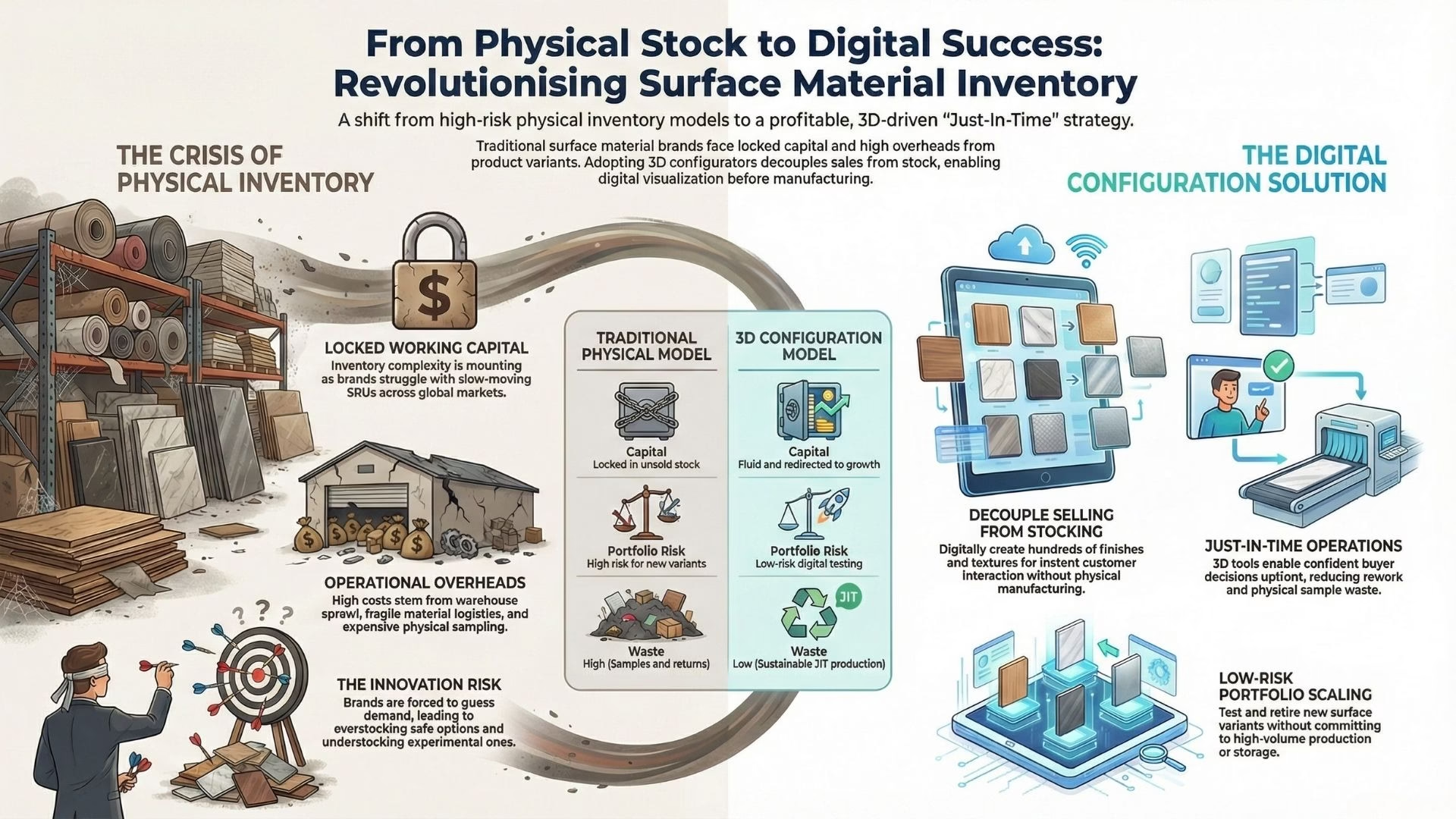
In India and the Middle East, this often means high working capital tied up in slow-moving SKUs.
In the US and Canada, it shows up as warehouse sprawl, higher insurance, and write-offs.
The Hidden Problem: Inventory Forces Brands to Guess
Traditional inventory models force brands to make decisions before demand is clear:
- Which finishes will sell?
- Which textures will actually be specified?
- Which variants will remain unsold?
This leads to:
- Overstocking safe options
- Understocking experimental ones
- Conservative innovation
Ironically, inventory limits creativity.
Why Selling Surface Materials Is Fundamentally a Visualization Problem
Here’s the key insight many brands miss:
Customers don’t buy laminate sheets.
They buy how a surface looks in their space.
Yet most sales processes rely on:
- Small swatches
- Partial boards
- Printed catalogs
These tools force buyers to imagine large surfaces—often incorrectly.
How 3D Configurators Change the Economics of Selling
3D configurators allow brands to decouple selling from stocking.
Instead of holding physical inventory for every variant, brands can:
- Digitally create hundreds of finishes
- Apply them instantly on kitchens, wardrobes, panels, and furniture
- Let customers explore combinations interactively
The physical product is manufactured after the decision—not before.
Selling More Variants With Less Inventory
This is where the model truly shifts.
With Physical Inventory
- Each variant needs stock
- Slow movers block capital
- Expansion means higher risk
With 3D Configuration
- Variants exist digitally
- Only selected combinations move to production
- Portfolio expansion becomes low-risk
Brands can now:
- Offer more finishes without warehousing them
- Test new surfaces without committing to volume
- Retire underperforming variants quietly
Enabling Just-In-Time (JIT) Inventory in Surface Materials
Just-In-Time inventory has long been a goal—but difficult in surface materials due to visualization gaps.
3D configurators solve this by:
- Allowing confident buyer decisions upfront
- Reducing rework and post-order changes
- Giving production teams clearer, validated specifications
Regional Impact
India & Middle East
- Less dealer stock pressure
- Reduced sample replacement
- Lower unsold inventory
US & Canada
- Leaner warehouses
- Better production forecasting
- Stronger alignment with sustainability goals
Sustainability: The Often-Ignored Inventory Benefit
Inventory isn’t just a financial problem—it’s an environmental one.
Excess inventory leads to:
- Wasted materials
- Discarded sample boards
- Reprinting catalogs
- Additional transportation emissions
By selling digitally first, brands:
- Reduce material waste
- Minimize overproduction
- Lower their carbon footprint
Sustainability becomes a byproduct of better operations, not just a marketing claim.
What This Means for the Future of Surface Material Brands
The most resilient brands are moving toward a new operating model:
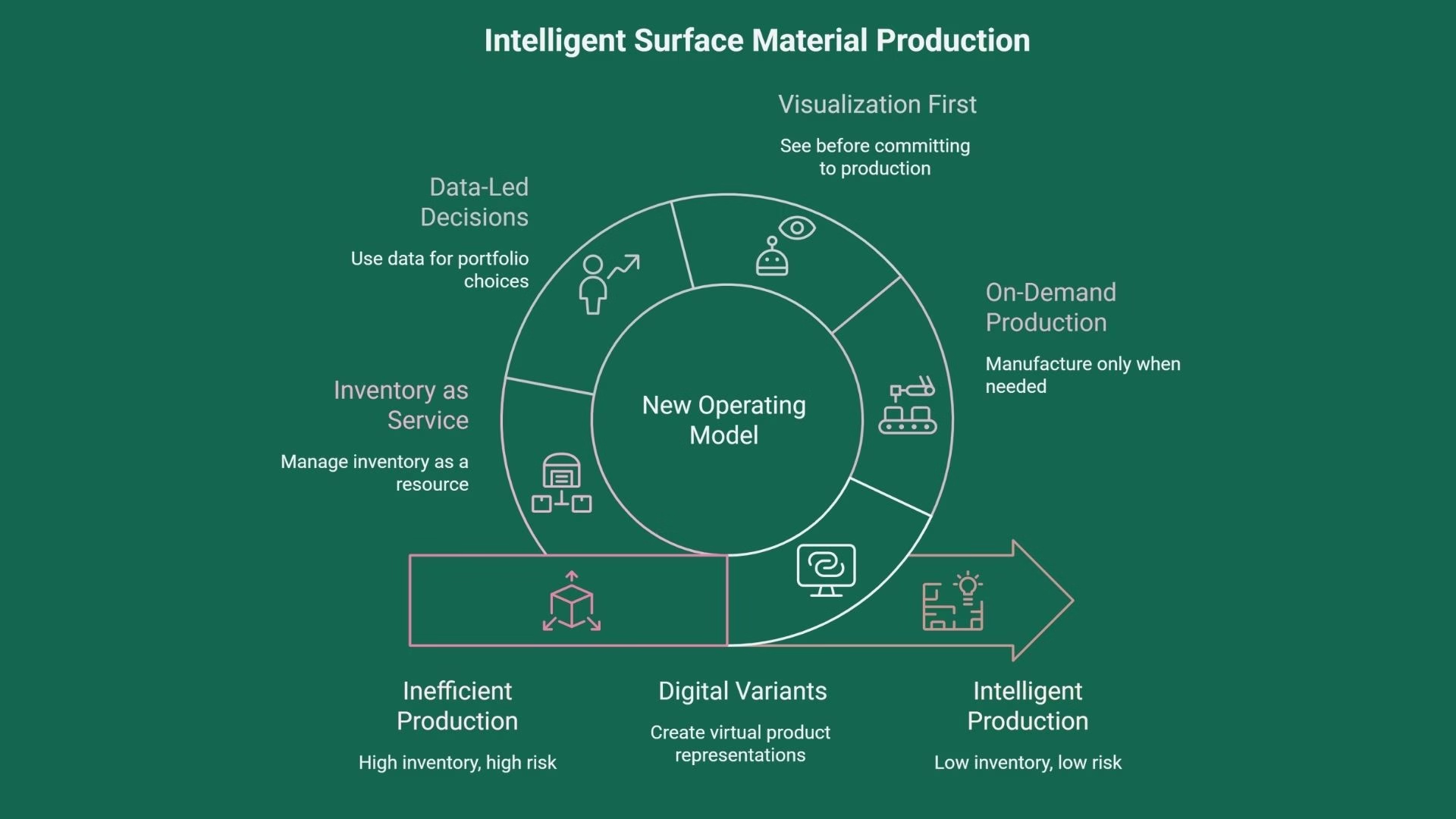
- Digital variants, physical production on demand
- Visualization before manufacturing
- Data-led portfolio decisions
- Inventory as a service layer—not a risk
This isn’t about replacing physical materials.
It’s about using them more intelligently.
Conclusion: Scale Smarter, Not Heavier
In today’s surface material industry, growth no longer means:
- Bigger warehouses
- More stock
- Higher risk
It means:
- Better visualization
- Leaner inventory
- Faster, more confident decisions
3D configurators are not just sales tools.
They are inventory strategy tools.
What if you could sell 5× more surface variants while stocking fewer physical samples?
Explore how digital configuration can help your brand move toward a more profitable, just-in-time future.