Once businesses adopt interactive 3D configurators, the next challenge becomes clear:
How do we connect customer customization with real business operations?
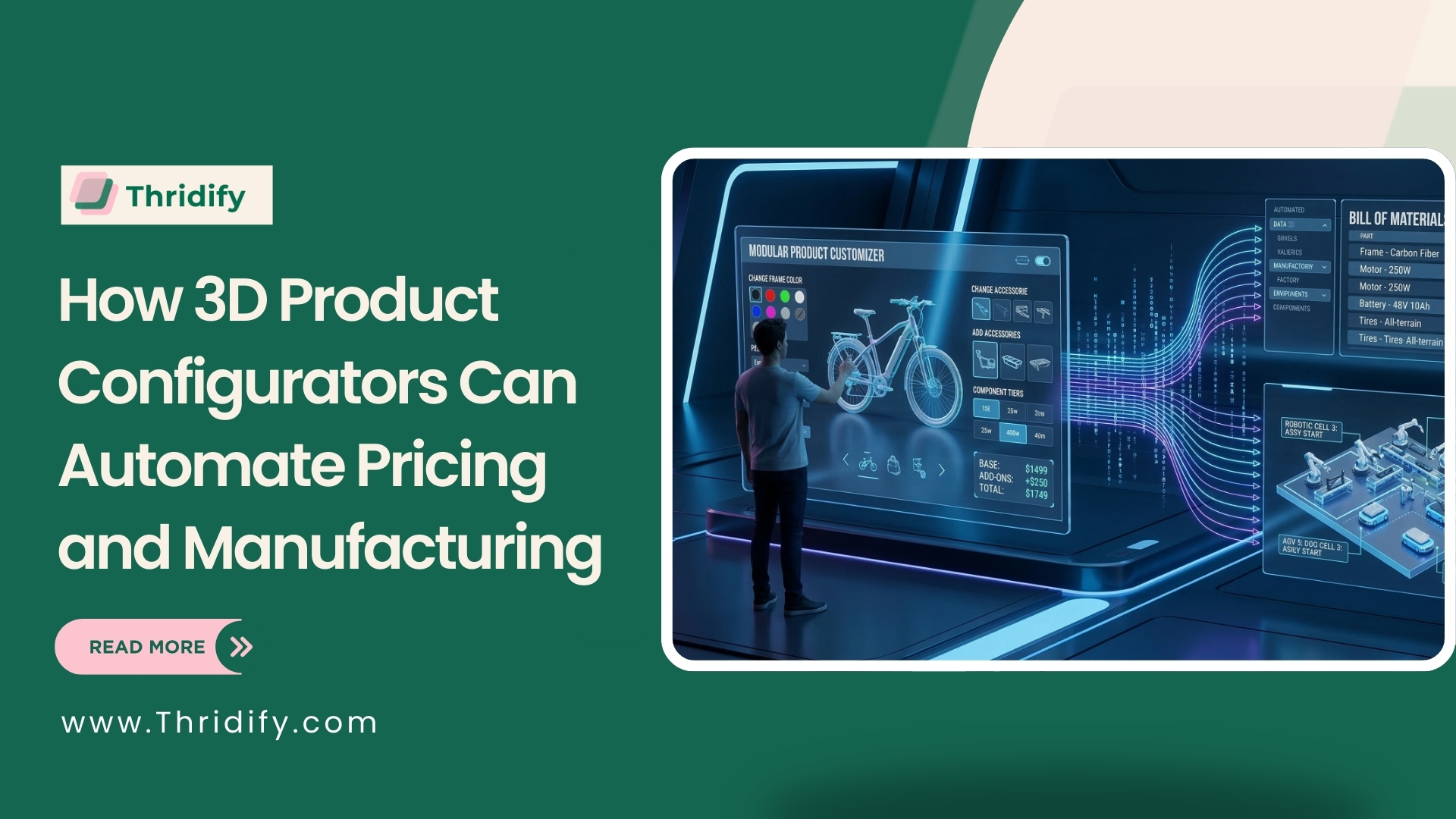
Because while visual product customization improves engagement, the real transformation happens when configurators automate the sales-to-production pipeline.
This is where next-generation visual commerce platforms are redefining product configuration.
The Missing Link Between Sales and Manufacturing
For many product-based companies, the biggest inefficiency happens between customer interest and production planning.
When a customer customizes a product online, the company still needs to determine:
- What components are required
- How much the product costs
- Whether the configuration is manufacturable
- How the product should be assembled
If these steps require manual work, the sales cycle slows down dramatically.
That’s why modern configurators are evolving to support automated product intelligence.
Real-Time Pricing: A Game-Changer for Conversion
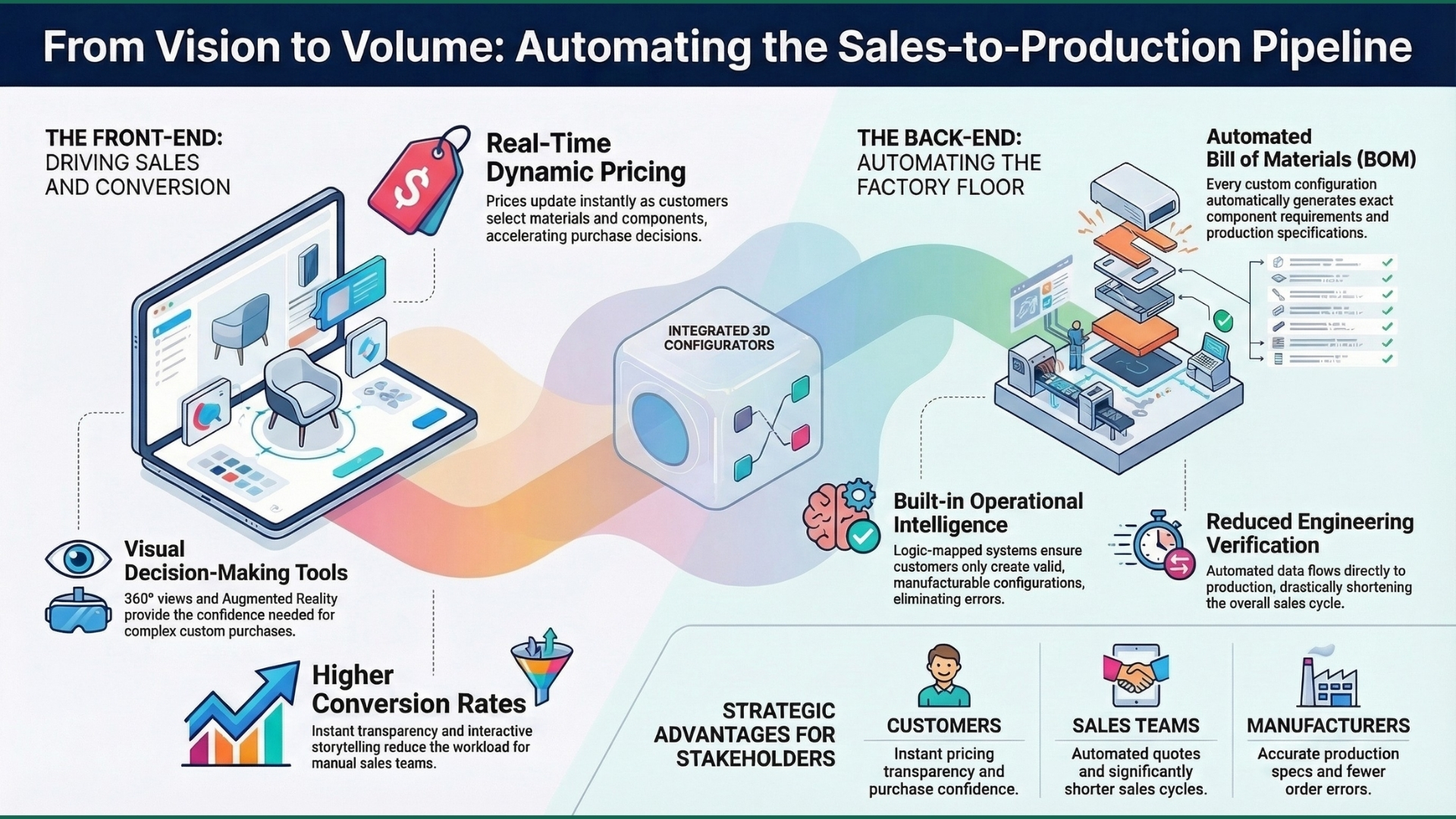
One of the most powerful features of advanced configurators is dynamic pricing.
Instead of requesting a quote, customers see prices update instantly based on their selections.
For example:
- Changing material updates the price
- Selecting premium components adjusts cost
- Adding accessories modifies the final total
Thridify’s platform enables real-time pricing updates during product customization, helping buyers understand cost implications instantly.
This has several business benefits:
- Faster purchase decisions
- Reduced workload for sales teams
- Improved pricing transparency
- Higher conversion rates
Automated Bills of Materials (BOM)
Beyond pricing, configurators can generate production-ready data.
Every configuration can automatically produce a Bill of Materials (BOM) based on the selected options.
For manufacturers, this means:
- Exact component requirements
- Fewer order errors
- Faster production planning
- Reduced engineering verification
Instead of translating customer requests manually, the configurator already contains the logic needed to generate production specifications.
Turning Customization Into Operational Intelligence
When configuration systems are properly designed, they become a digital twin of the product catalog.
Every option and dependency is mapped into the system.
For example:
- A larger product size automatically changes structural components
- Premium materials increase cost and update manufacturing specs
- Certain accessories become available only for compatible variants
This ensures customers only create valid configurations, eliminating costly production mistakes.
Why Visualization Still Matters
While automation is critical, visual experiences still play a major role in customer confidence.
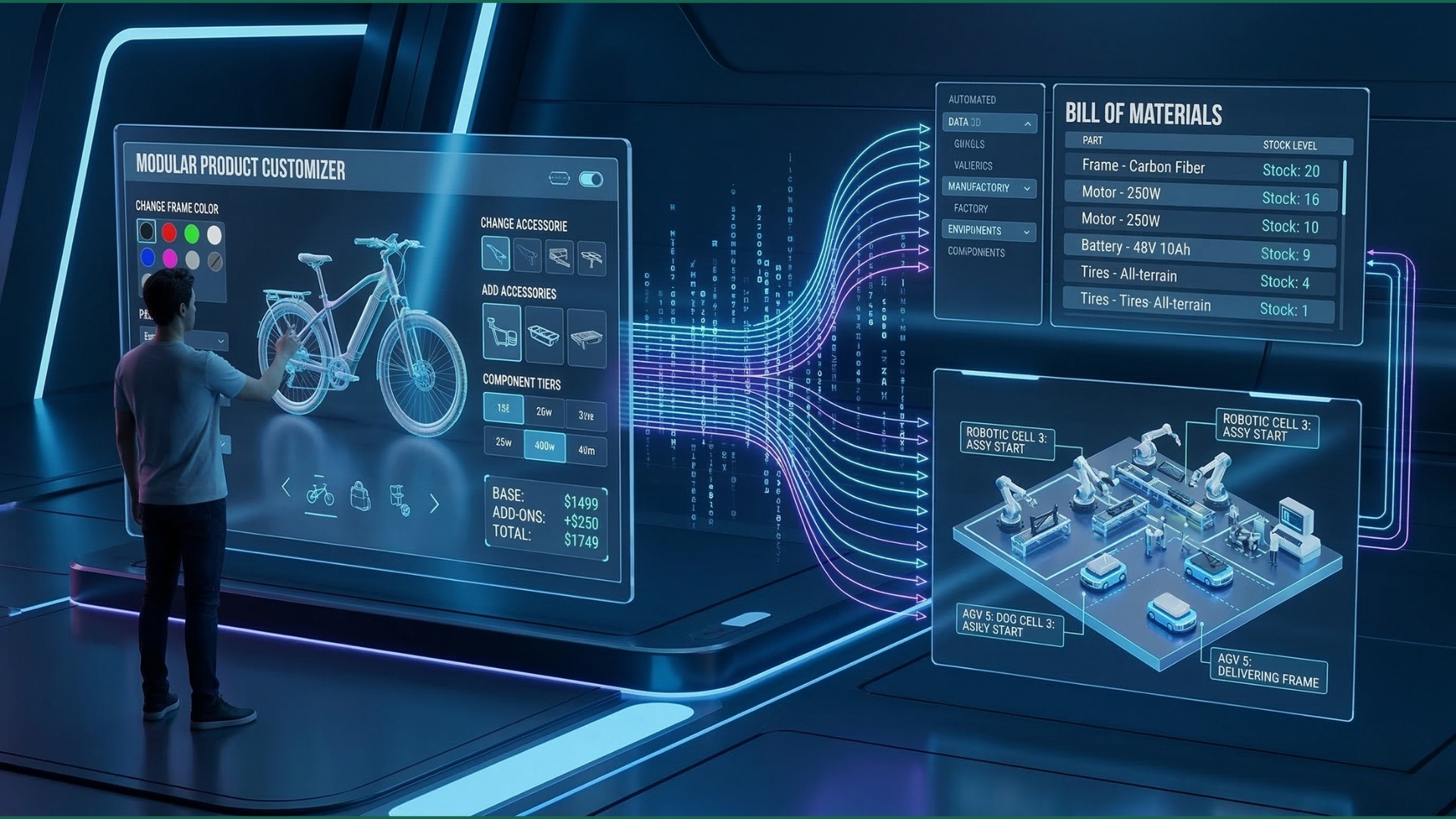
High-quality 3D visualization helps buyers understand exactly what they’re purchasing.
Thridify enhances this experience with:
- Interactive 360° product viewing
- Realistic lighting and environments
- Interactive hotspots for product storytelling
- Augmented Reality product placement
Recent improvements like ambient occlusion shadows and improved mobile usability further increase realism and usability across devices.
When combined with operational logic, visualization becomes far more than just marketing.
It becomes a decision-making tool.
The Strategic Advantage of Sales-to-Production Automation
Companies that connect configurators to production systems gain significant advantages.
For Customers
- Instant pricing transparency
- Confidence in customized purchases
- Faster buying decisions
For Sales Teams
- Automated quotes
- Shorter sales cycles
- Reduced manual configuration checks
For Manufacturers
- Accurate production specifications
- Fewer order errors
- Faster production planning
Instead of disconnected workflows, the entire system becomes digitally connected.
The Future of Configurable Products
The next evolution of product configuration will move beyond eCommerce alone.
Configurators will become central tools for:
- Supply chain optimization
- Manufacturing automation
- Product personalization at scale
- Omnichannel sales experiences
Platforms that combine visual engagement with operational intelligence will define the next generation of digital commerce.
✔️ The key takeaway:
The most powerful configurators don’t just show products.
They run the business logic behind them.