What Is 3D Commerce? A Plain Guide for Product Brands

What if the reason your customer left without buying had nothing to do with your price, your delivery time, or your product itself?
That question is worth sitting with, and 3D commerce is where the answer usually lands. For furniture, kitchen, and custom-product brands, the answer is often the same: the customer couldn't picture it. They saw your sofa in a studio. They couldn't see it in their living room. So they didn't buy. That gap between what static photography shows and what a buyer actually needs to feel confident is exactly what 3D commerce closes.
3D Commerce Is Interactive Visualization, Not Just Pretty Pictures
3D commerce is a category of tools that let shoppers interact with a product digitally before they buy it. Not a better photo. Not a video. Something they can turn, resize, reconfigure, and place in their own space.
There are three tools that sit under this umbrella, and they do different things.
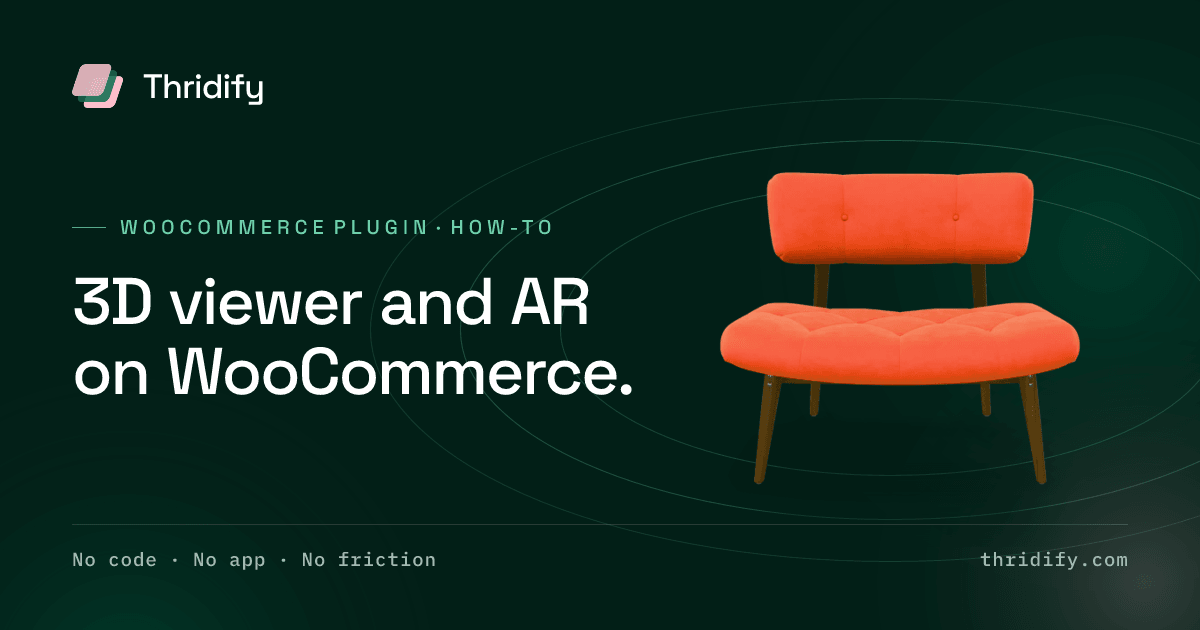
A 3D viewer lets a customer rotate a product 360 degrees, zoom into details, and inspect it from any angle. It replaces the flat image with a model the shopper controls.
A 3D configurator goes further. It lets the customer change the product: choose a fabric, switch a finish, adjust a dimension, swap a leg style. Every change updates the model in real time. The customer builds the version they want, not the version you photographed.
Augmented reality (AR) places the configured product into the customer's actual room using their phone camera. They hold up the phone and see the sofa against their own walls, at true scale.
These three tools can work independently or together. Choosing the right one depends on your product and your customer's biggest doubt, there's no single answer that fits every category.
Where 3D Commerce Changes the Buying Journey
Consider a customer browsing a furniture site. They find a sofa they like. There are three studio photos: front, side, diagonal. The colour looks like a warm grey, but the monitor they're on runs cool. The dimensions are listed, but they can't picture 210 cm against the wall they have in mind. There's a drop-down for fabric, but no way to see what "Slate Boucle" actually looks like on this particular frame. They leave. Later, a competitor's site lets them switch fabrics live, spin the sofa, and drop it into their living room with AR. They buy there.
That's the before and after. The friction isn't price. It's doubt.
3D commerce addresses the four specific doubts that kill furniture and kitchen sales:
- Fit: Will this physically work in my space? AR at true scale answers it.
- Colour: Does this finish match what I already own? A live configurator with accurate material rendering answers it.
- Scale: Does this feel right for the room, or will it overpower it? A 3D viewer with room context answers it.
- Customization: If I change the leg or the fabric, what do I actually get? A configurator answers it without requiring a phone call or a showroom visit.
What actually changes when you add 3D to your furniture store goes deeper on the before-and-after for furniture brands specifically. The short version: customers who interact with a 3D model are further along in their decision when they reach the cart.
Which Product Categories Win Biggest with 3D Commerce
Not every product needs a 3D viewer. A box of tea does not. But there's a clear pattern in the categories where 3D commerce has the most impact: they're the ones where the customer is afraid of getting it wrong.
Furniture sits at the top of that list. It's expensive, it's large, and it stays. A customer who buys the wrong sofa has a significant problem. The fear of that mistake is what keeps them browsing for weeks without committing.
Kitchens are even more complex. A kitchen is a configuration problem by nature: cabinet doors, worktop materials, hardware finishes, appliance placement. Showing a single rendered photo of one configuration doesn't help a customer who wants a different layout with different doors. A configurator does.
Custom products (furniture with bespoke dimensions, upholstered headboards in customer-chosen fabrics, shelving in non-standard sizes) have an additional problem: the customer is buying something that doesn't exist yet. They're committing real money to an outcome they can only imagine. A configurator that renders their specific choices in real time changes that entirely. Khronos
These categories share a common thread: the purchase is high-consideration, and the cost of a mistake falls on the customer. 3D tools reduce that perceived risk, which is why they move the needle in these categories in ways they don't for low-stakes impulse purchases.
How 3D Commerce Cuts Returns and Lifts Conversion
The business case follows directly from the customer experience.
When a customer configures a product, sees it in AR, and buys it, they know what they ordered. The gap between expectation and delivery closes. That's the mechanism behind lower return rates. Returns in furniture and custom categories are expensive: the logistics cost, the restocking, the damage assessment, and the customer service hours all add up. Fewer surprises at delivery means fewer returns.
Conversion improves because doubt is the main reason browsers don't buy. Remove the doubt and more of them do. A customer who has spent four minutes rotating and configuring a sofa has already done most of the mental work of owning it. That investment in the experience carries forward.
Average order value tends to rise too. A configurator that shows upgrades visually (a premium fabric, a solid wood base instead of painted MDF) makes the upgrade legible. The customer can see the difference, not just read about it. That's a different kind of upsell than a text line in a drop-down.
Building a configurator that actually drives sales covers the design decisions that separate a configurator that converts from one that just looks impressive.
Getting Started: What Your Brand Needs
The assumption that 3D commerce requires a large development team and a six-figure budget has been out of date for a while. No-code platforms have made this accessible to brands that have no in-house technical capability at all.
Thridify, for example, is a no-code 3D and AR commerce platform for product brands, from furniture, kitchens and laminates to doors and windows, sanitaryware, electronics and luggage. It brings 3D viewers, configurators, and AR into one stack without requiring a developer to wire them together. Thridify
What you do need is 3D asset files of your products. If you don't have them, that's the first conversation to have with your supplier or a 3D modelling studio. Once the assets exist, the barrier to publishing them interactively is lower than most brands expect.
The question isn't whether 3D commerce is technically within reach. For most brands in these categories, it is. The question is where to start.
Start by auditing your top-selling products: which ones generate the most returns, the most customer questions about fit or customization? Those are your candidates for 3D visualization.
Have questions or ready to get started?
Get in touch with Thridify