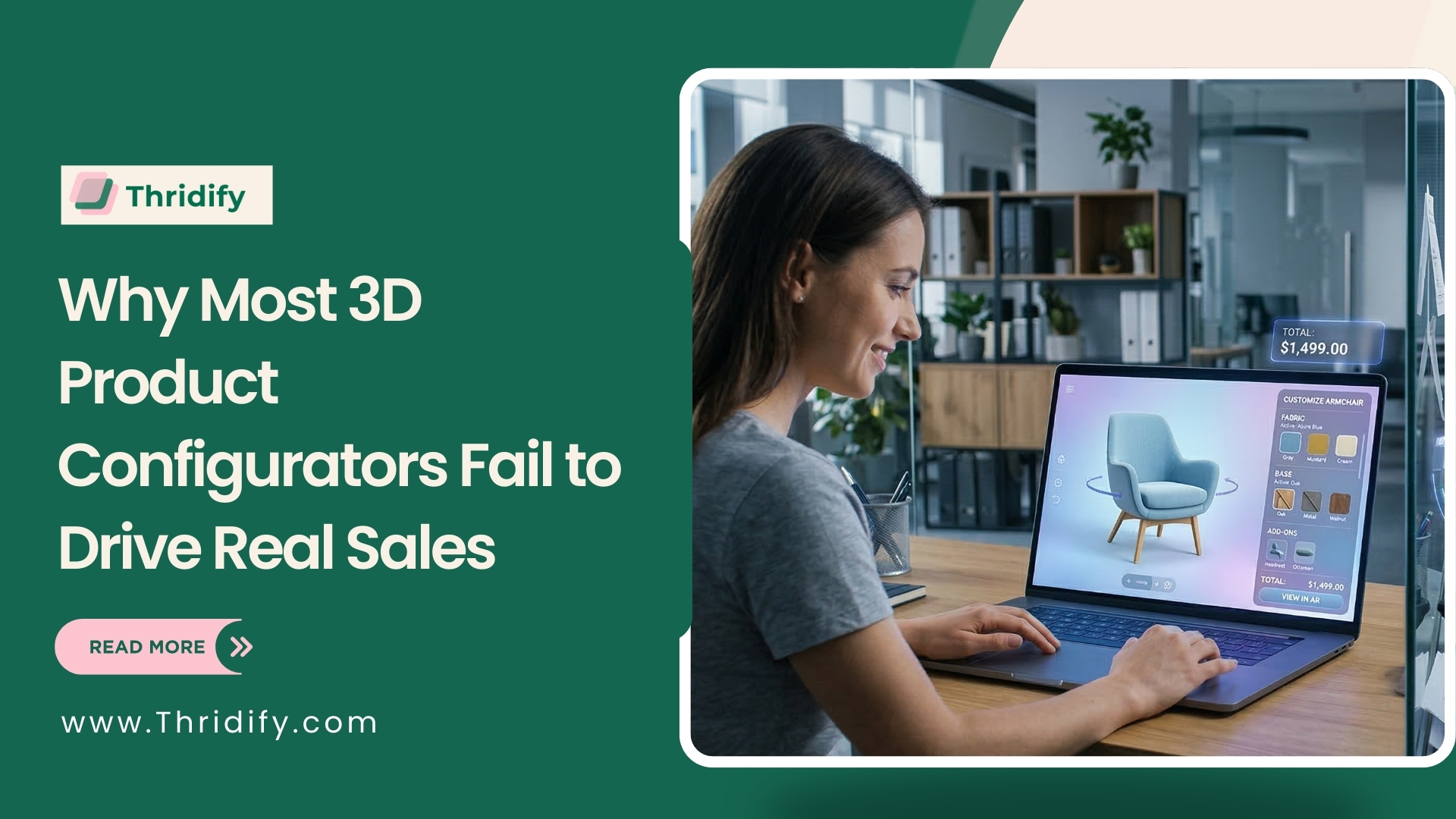
3D product configurators have become one of the most exciting tools in modern eCommerce. They allow customers to rotate products, explore variants, and customize designs in real time.
From furniture and interiors to electronics and accessories, brands are investing in interactive product experiences to make online shopping more engaging.
But despite the visual appeal, many configurators fail to deliver the one outcome businesses care about most: higher sales efficiency.
The reason is simple.
Most 3D configurators focus on visual customization, not commercial functionality.
The Rise of Visual Product Experiences
Consumers increasingly expect immersive shopping experiences online.
Static images no longer provide enough information when customers want to explore materials, sizes, colors, or configurations before purchasing.
This is where interactive 3D product viewers and configurators come in.
Platforms like Thridify allow brands to present products in 360-degree interactive views, letting shoppers explore items from every angle and personalize them instantly.
Customers can:
- Change colors and materials
- Switch between product variants
- Explore products in detail
- View realistic product renders
The experience feels closer to shopping in a showroom rather than browsing a catalogue.
And this visual engagement does increase interest.
But it does not automatically solve deeper sales challenges.
The Hidden Problem Behind Many Configurators
Many companies discover a frustrating reality after launching their configurator.
Customers enjoy interacting with the product.
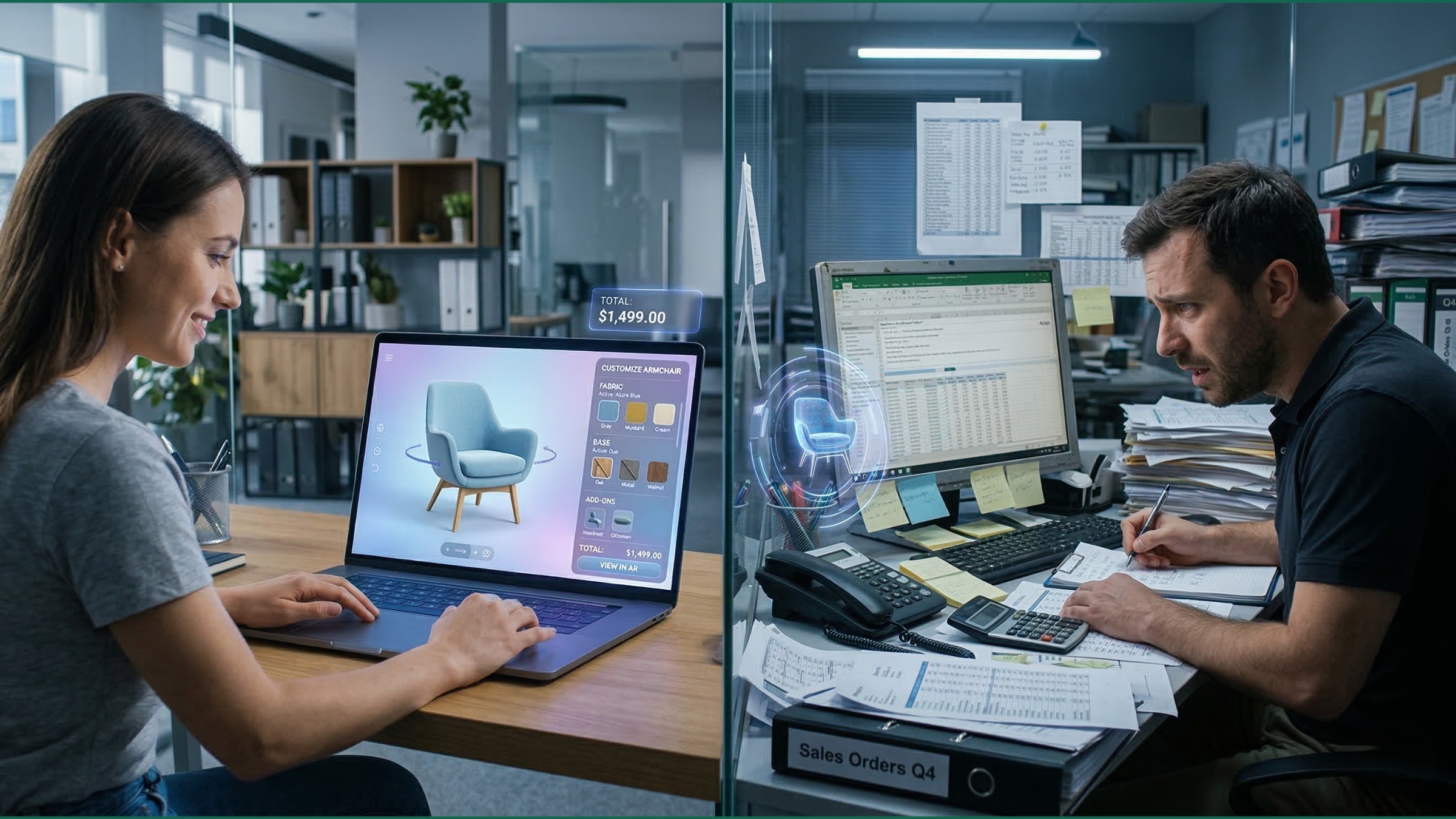
But the buying process still looks like this:
- Customer customizes the product
- Customer submits a quote request
- Sales team calculates pricing manually
- Engineering checks configuration feasibility
- Production team prepares manufacturing specs
This creates multiple issues:
- Slow pricing responses
- Manual errors in configuration
- Long sales cycles
- Operational bottlenecks
In other words, the front-end experience feels modern, but the backend process remains manual.
When a Configurator Becomes Just a “Visual Toy”
Without deeper integration into the sales workflow, a configurator becomes little more than a visual exploration tool.
Customers may enjoy interacting with the product, but they still need:
- Accurate pricing
- Confirmation that their configuration can be produced
- Confidence before placing an order
If these answers are delayed, interest quickly fades.
For businesses selling customizable or modular products, this delay can significantly reduce conversion rates.
What Modern Buyers Actually Expect
Today’s customers are used to instant digital feedback.
When they customize a product online, they expect the system to immediately show:
- How the product looks
- How much it costs
- What options are available
- Whether the configuration is valid
If the system cannot provide this information instantly, the experience feels incomplete.
That’s why the next generation of configurators is moving beyond simple visualization.
From Visualization to Sales Intelligence
The real power of a configurator appears when it connects product customization with commercial logic.
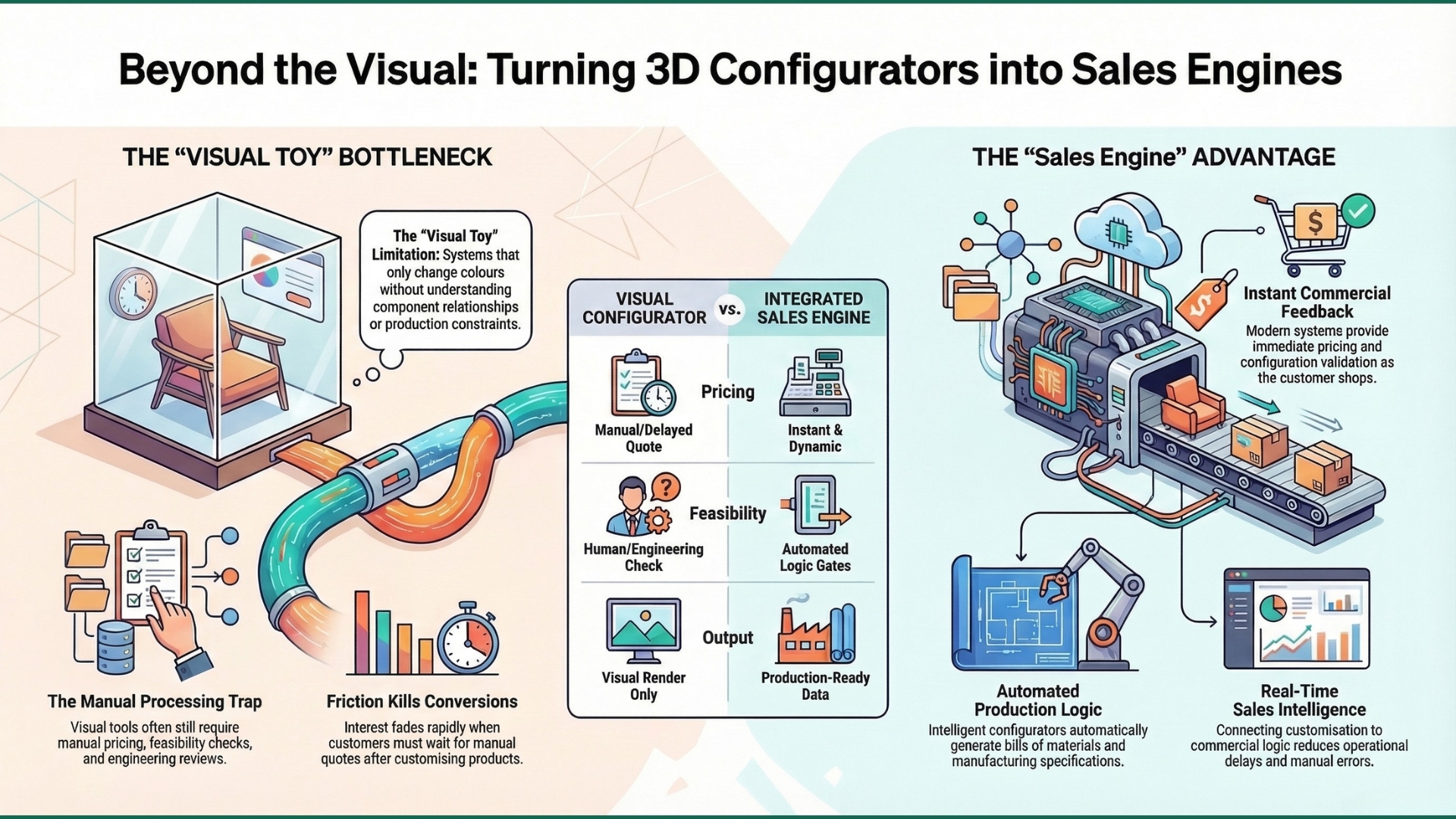
Instead of just changing colors or materials visually, the system should understand:
- Component relationships
- Product dependencies
- Cost changes based on options
- Production constraints
This turns a configurator into something much more valuable:
A real-time sales engine.
Customers receive immediate answers while businesses reduce manual effort and operational delays.
The Next Step: Connecting Configuration to Production
Visual configurators are only the first step.
The real transformation happens when configuration tools connect directly to pricing logic, bills of materials, and manufacturing workflows.
This is where companies unlock the full value of interactive commerce.
👉 In the next article, we explore how sales-to-production automation turns configurators into powerful operational tools.
Read next:
How 3D Configurators Can Automate Pricing and Manufacturing Workflows