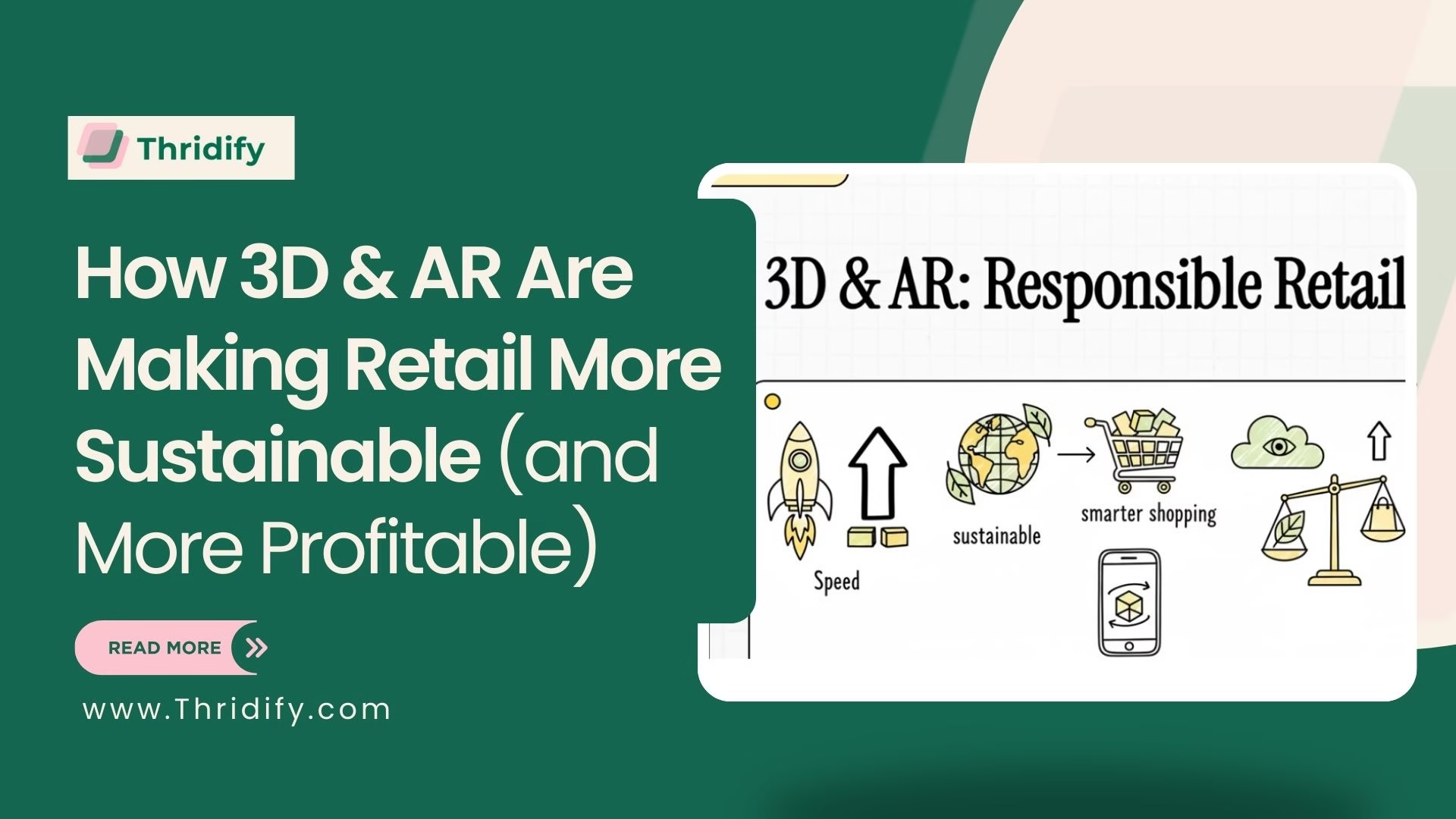
For years, the future of retail was defined by speed and scale.
Today, it’s being redefined by responsibility.
Modern D2C brands and retailers are facing a new reality: growth can no longer come at the cost of waste, excessive returns, and rising carbon footprints. Customers are more conscious. Regulations are evolving. Margins are under pressure. And sustainability is no longer a “nice-to-have” — it’s a business imperative.
At Thridify, we believe the future of shopping lies at the intersection of experience, efficiency, and environmental responsibility.
And technologies like 3D models, immersive 3D viewing, intelligent configurators, and Augmented Reality (AR) are making that future real — today.
The Hidden Environmental Cost of Modern Commerce
E-commerce solved convenience. But it quietly created a sustainability challenge.
- Online return rates are 2–3x higher than in-store purchases
- Product returns contribute over 24 million metric tons of CO₂ emissions globally each year
- Millions of returned items never re-enter the supply chain — they’re discarded, destroyed, or landfilled
Why does this happen?
Because customers often buy without true product clarity.
Flat images. Static pages. Incomplete context.
All of these lead to uncertainty — and uncertainty leads to returns.
Returns don’t just hurt the planet.
They hurt profitability, logistics efficiency, and brand trust.
Why Experience Is the Missing Link in Sustainable Retail
Sustainability isn’t only about materials or packaging.
It’s about better decisions at the point of purchase.
This is where 3D and AR-powered commerce fundamentally changes the game.
At Thridify, we see 3D not as a visual upgrade — but as a decision engine.
What 3D & AR Enable
- Customers explore products in true scale and detail
- Products can be configured, customized, and previewed instantly
- AR allows shoppers to place products in their real environment
- Buyers gain confidence before clicking “Buy Now”
The result?
Fewer mistakes. Fewer returns. Less waste.
The Biggest Sustainability Win: Reducing Returns at the Source
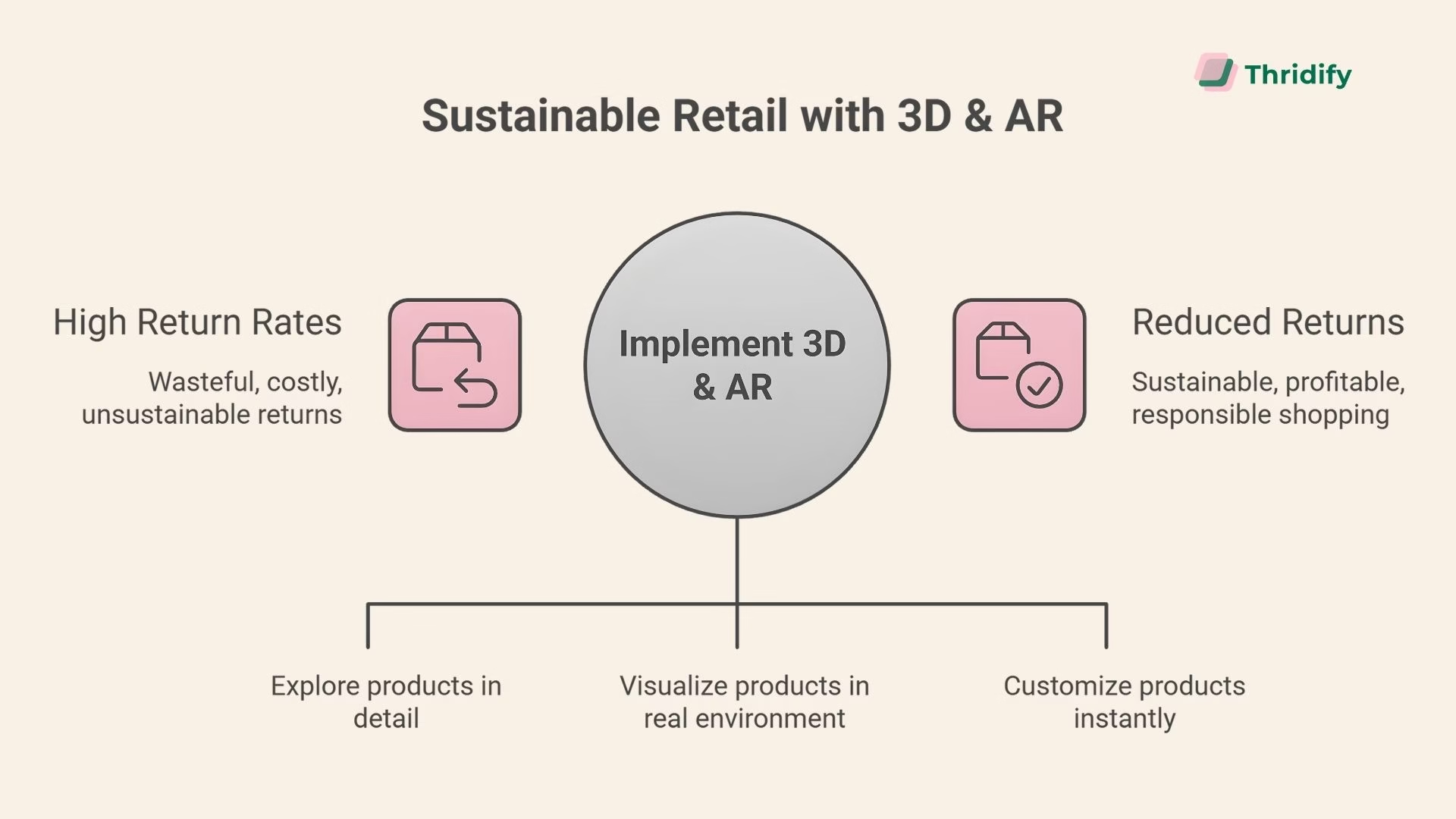
Returns are one of the largest contributors to retail emissions — and one of the most avoidable.
Industry data consistently shows:
- 30–40% reduction in return rates when shoppers interact with 3D models or configurators
- AR experiences reduce “not as expected” returns by 40% or more
- Shoppers who view products in 3D are significantly more confident in their purchase decisions
Why This Matters
Every avoided return eliminates:
- Two-way shipping emissions
- Repackaging and handling waste
- Reverse logistics costs
- Carbon-intensive warehousing and disposal processes
On a global scale, even a 30% reduction in returns could prevent millions of tons of CO₂ emissions every year.
This is sustainability by design — not by offset.
Beyond Returns: Reducing Sampling, Travel & Overproduction
Traditional retail relies heavily on:
- Physical product samples
- Multiple showroom visits
- Trial-and-error purchasing
- Excess inventory built “just in case”
3D commerce replaces this with digital certainty.
With Thridify’s 3D & AR solutions
- Brands replace physical samples with digital twins
- Customers explore products without repeated store visits
- Manufacturers reduce unnecessary prototyping
- Retailers produce with greater demand accuracy
This leads to:
- Lower material usage
- Reduced customer travel emissions
- Less unsold inventory
- More efficient supply chains
Sustainability improves — before the product even ships.
Sustainable Commerce That Directly Improves EBITDA
One of the biggest myths around sustainability is that it hurts profitability.
In reality, 3D and AR improve margins.
Here’s how Thridify-powered experiences impact the bottom line:
1. Higher Conversions
Interactive 3D and AR experiences can increase purchase intent by up to 90%, with conversion uplifts ranging from 40% to over 200% depending on the category.
2. Lower Return & Logistics Costs
Fewer returns mean:
- Reduced reverse shipping
- Lower refund processing
- Less damaged inventory
3. Higher AOV Through Configuration
3D configurators encourage personalization, upgrades, and premium choices — increasing average order value organically.
4. Smarter Inventory Planning
Better product understanding leads to better demand forecasting and reduced overproduction.
Result:
Higher revenue. Lower costs. Stronger EBITDA.
And a measurable sustainability impact.
Real-World Proof: Experience Drives Responsibility
Global brands adopting immersive commerce have already seen the impact.
- Furniture & Home brands using AR report return reductions of up to 35%
- Beauty and fashion brands using virtual try-ons see fewer mismatches and higher engagement
- Electronics and configurable products see higher confidence and fewer post-purchase issues
Across industries, one pattern is clear:
When customers see better, they choose better.
3D Commerce, ESG & the Future of Responsible Retail
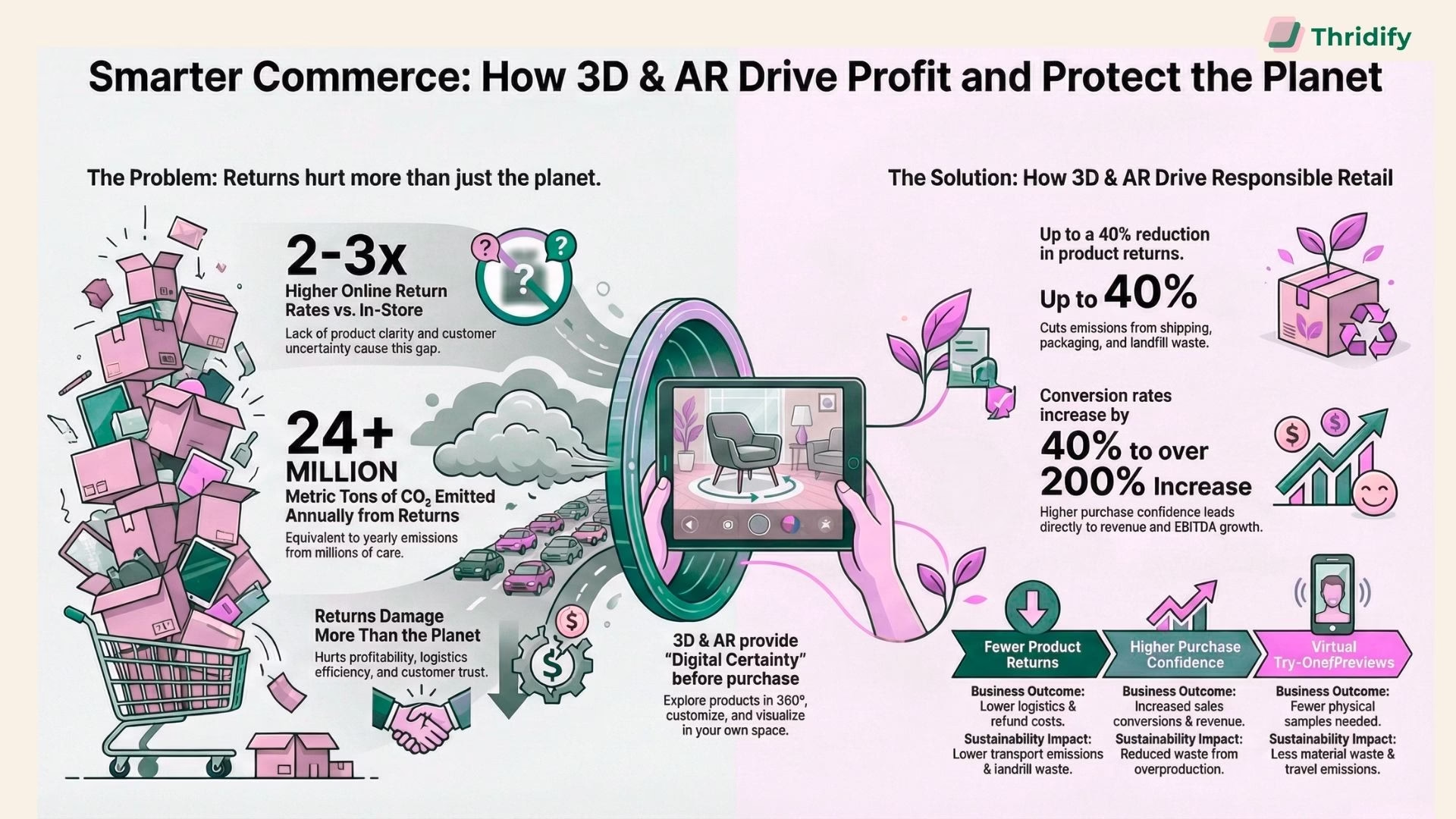
As ESG reporting becomes more important, brands are being evaluated not just on promises — but on operational impact.
3D and AR commerce directly contribute to:
- Scope 3 emissions reduction
- Responsible consumption and production (UN SDG 12)
- Waste reduction metrics
- Sustainable innovation narratives
Brands using platforms like Thridify can:
- Quantify reduced returns
- Track logistics optimization
- Support ESG disclosures and audits
- Strengthen eligibility for sustainability certifications and green initiatives
This turns immersive commerce into a long-term strategic asset, not a short-term marketing feature.
Why Thridify Sees 3D as the Foundation of Future Commerce
At Thridify, we don’t believe sustainability should slow commerce down.
We believe it should make commerce smarter.
3D models, AR experiences, and intelligent configurators allow brands to:
- Sell with clarity
- Operate efficiently
- Reduce waste at scale
- And grow responsibly — without complexity
This is not about replacing human creativity or physical retail.
It’s about augmenting decision-making — for customers, brands, and the planet.
The Takeaway
The future of D2C and retail will not be built on static pages and guesswork.
It will be built on:
✔ Immersive product understanding
✔ Confident purchasing decisions
✔ Reduced waste and emissions
✔ Stronger margins and loyalty
With 3D and AR, sustainability stops being a trade-off — and becomes a competitive advantage.
And that’s the future Thridify is building.