E-commerce has entered a new era—one where static product photos and dropdown menus no longer meet customer expectations. Today’s shoppers want agency. They want clarity. They want to personalize products and see them in their own style before they commit.
That’s where the 3D product configurator steps in, reshaping how brands display, customize, and sell their products online.
If you’ve seen the term floating around and wondered what makes it so powerful—or why companies from furniture to fashion to industrial tools are adopting it—this guide breaks it down in a clear, approachable way.
Let’s dive in.
What Exactly Is a 3D Product Configurator?
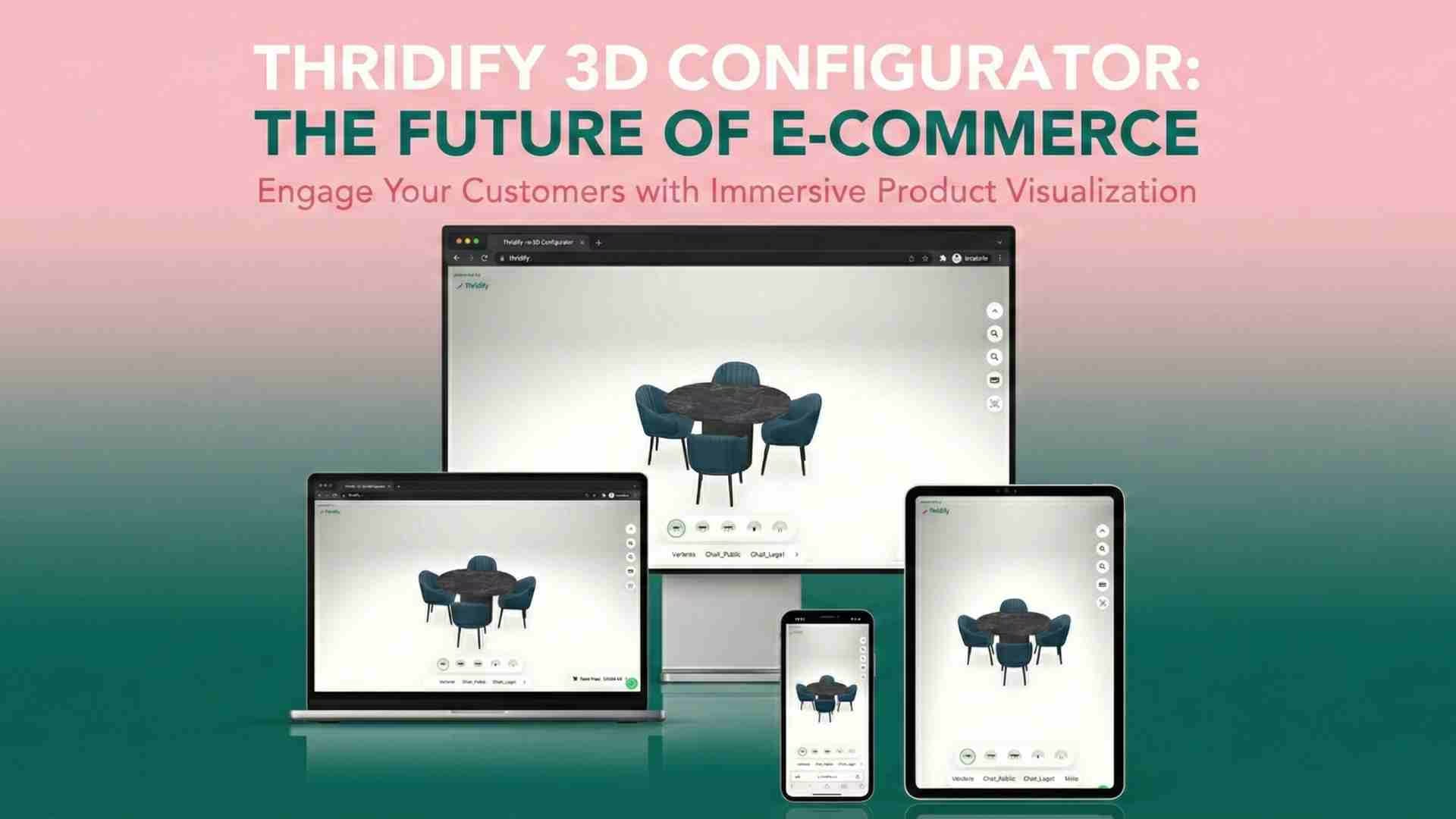
At its core, a 3D product configurator is an interactive tool that lets customers visualize, explore, and customize products in real time. Instead of imagining how a different color, material, or feature might look, the customer rotates, zooms, or adjusts the product directly on screen.
Think of it as the digital equivalent of walking into a store and physically trying different options—except the experience lives inside your browser or mobile device.
Key Features of a Modern 3D Configurator
A powerful 3D product configurator typically includes:
360° product viewing
Real-time changes to materials, colors, components, and styles
Automatic pricing updates for every configuration
Photorealistic visuals that resemble real-world lighting and textures
Interactive hotspots for highlighting product benefits
The evolution from simple “color pickers” to high-fidelity interactive tools has transformed what customers expect from online shopping.
Why Brands Are Moving Toward 3D Product Configuration
In a world where digital and physical experiences are merging, customers value control and clarity. A 3D configurator gives them both. Beyond aesthetics, it delivers tangible, measurable results for businesses. Here’s how:
1. Boosts Sales by Increasing Buyer Confidence
Buying something customizable online can feel risky. Customers worry about:
What if it doesn’t look like I imagined?
What if I choose the wrong finish or size?
What if the price changes after I start configuring?
A 3D configurator eliminates these doubts.
By showing products exactly as they will appear—and updating the price instantly—shoppers trust their choices more. That trust translates into higher conversion rates and lower cart abandonment.
More clarity = more confidence = more sales.
2. Personalizes the Experience—Without Adding Complexity
Customizable products used to be a logistical nightmare. Each variation required:
new images,
new SKUs,
new marketing assets,
and often manual quoting by sales teams.
A 3D configurator solves this elegantly.
Customers configure products on their own, exploring infinite variations without overwhelming your operations. Brands get richer insights, and shoppers get an experience that feels designed just for them.
3. Reduces Decision Fatigue
Shoppers don’t want to decipher technical descriptions or imagine what a combination might look like. They want to see it.
By removing mental load, brands shorten the decision-making journey. Customers move from “I’m browsing” to “I’m buying” in minutes, not days.
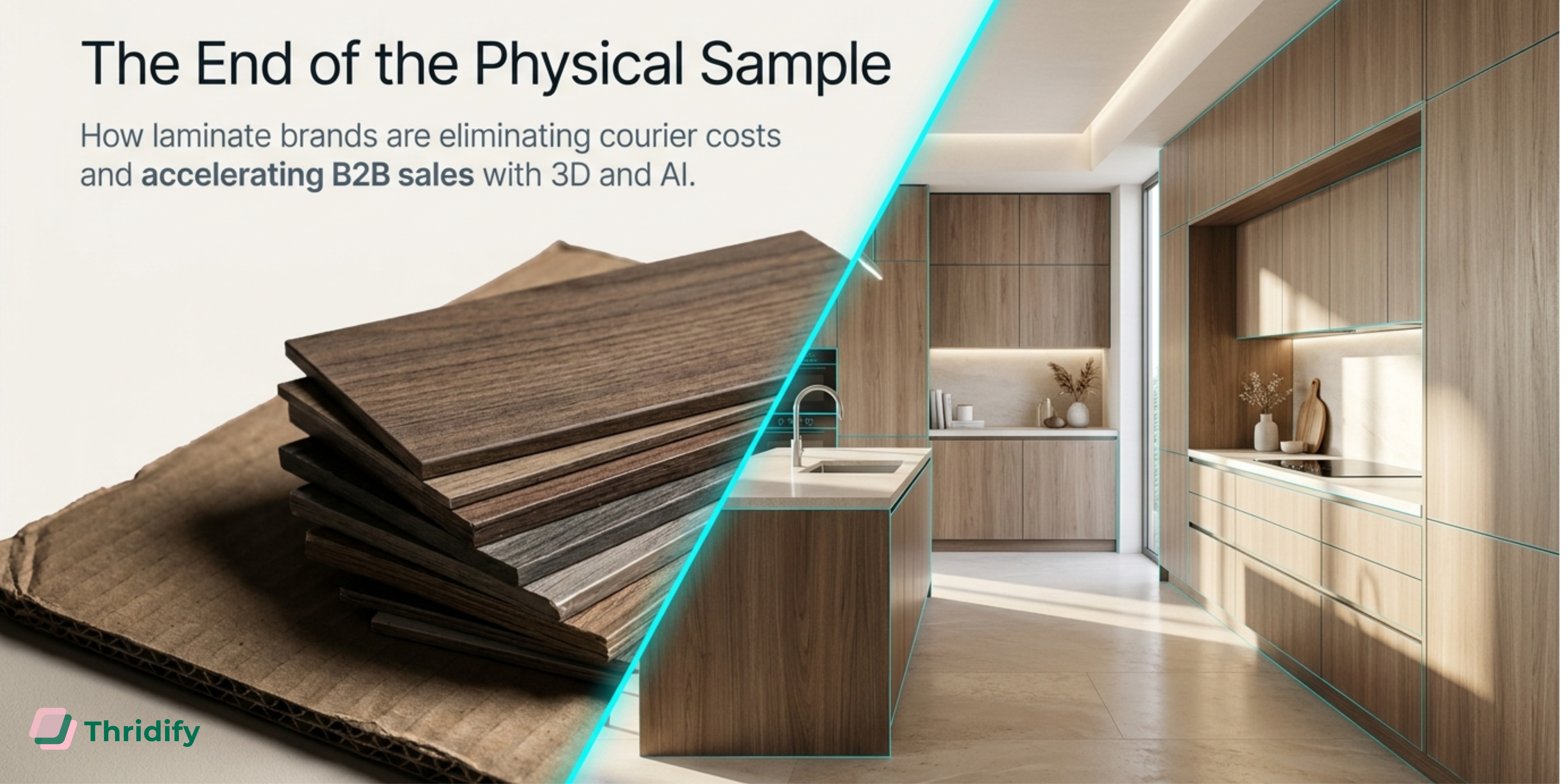
4. Dramatically Reduces Sampling and Prototyping Costs
This is one of the biggest hidden advantages.
For years, industries relied on multiple prototype rounds before a final version was approved. Each sample required materials, production time, photography, and shipping.
A 3D configurator replaces most of this with digital exploration.
Teams can:
evaluate design options digitally,
avoid unnecessary physical prototypes,
and eliminate expensive photoshoots for each product variant.
Platforms like Thridify go even further with one-click high-resolution 3D renders, making digital samples look studio-ready.
The savings—both financial and operational—are substantial.
5. Supports Sustainability by Reducing Waste
Physical samples often end up in warehouses or landfills. Shipping materials, packaging, and fuel add to the carbon footprint.
A 3D configurator offers a greener alternative:
fewer materials wasted
fewer shipments
fewer sample iterations
less overproduction
Sustainability isn’t just a brand value anymore—it’s a measurable impact. Digital-first product development helps brands actively reduce waste while speeding up their go-to-market process.
Inside a Next-Generation 3D Configurator: What Sets Thridify Apart
Not all 3D configurators are built equally. Many solutions focus on visuals but still require complex onboarding, slow rendering workflows, or manual sales support.
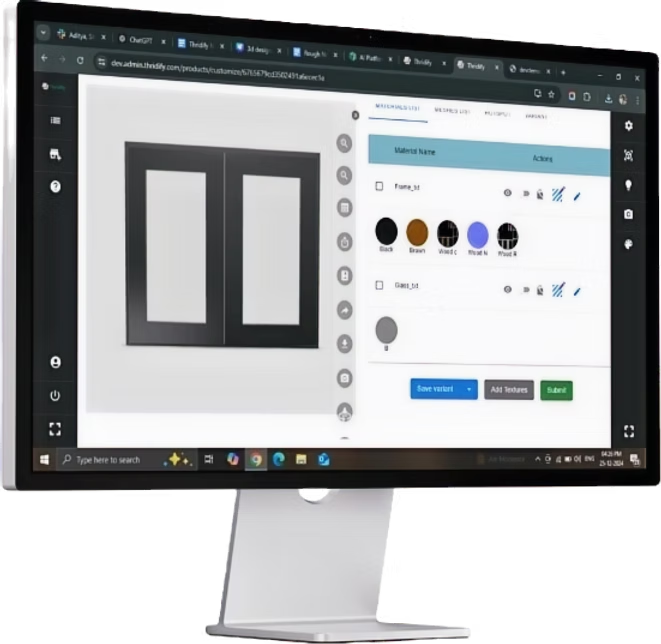
Thridify enhances the entire ecosystem, offering tools that work for both customers and internal teams.
Core Capabilities Thridify Brings to the Table
High-fidelity 3D visualization with true-to-life lighting
Real-time pricing logic for accurate quoting and instant decision-making
Interactive hotspots for storytelling and product education
One-click photorealistic renders that replace traditional photography
3D Digital Asset Management (3D DAM) to centralize and scale 3D assets effortlessly
In short: Thridify transforms how brands sell and how teams work.
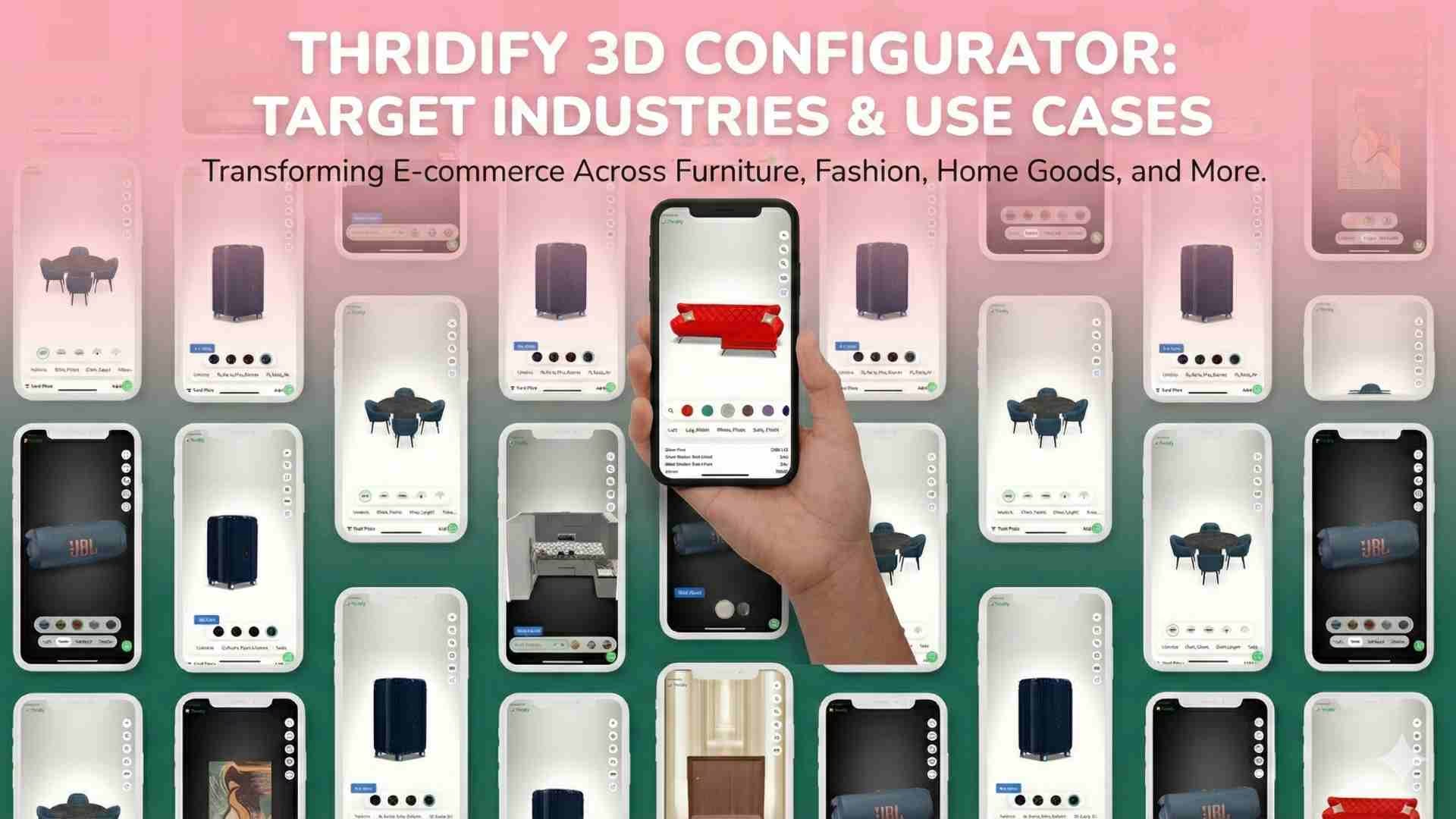
Industries Where 3D Configurators Are Already Changing the Game
The value of 3D product configuration extends across industries, especially where products are complex or customizable:
Furniture & home décor – materials, finishes, modular components
Fashion & apparel – shoes, bags, outerwear, embroidery
Automotive accessories – parts, finishes, trims
Industrial & manufacturing – configurable tools, machinery components
Sporting goods & outdoor gear – colorways, sizes, modular add-ons
If a product can be customized, a 3D configurator can elevate how it is bought.
The Future of E-Commerce Is Interactive, Immersive, and Sustainable
The shift is already underway: shoppers expect interaction, transparency, and personalization as standard. Brands that deliver this don’t just sell more—they build stronger connections and long-term trust.
A 3D product configurator is no longer a “premium” feature reserved for enterprise giants. With platforms like Thridify, it’s becoming an accessible, scalable tool for any brand wanting to modernize their digital experience.
More revenue.
Less waste.
Better customer experiences.
That’s the future Thridify is helping brands unlock.